Microsoft Agent 365: The Enterprise Control Plane for AI Agents
The enterprise control plane for AI agents—providing unified registry, Entra identities, security, compliance, visibility, and lifecycle governance for secure, scalable agent fleets across Microsoft 365.

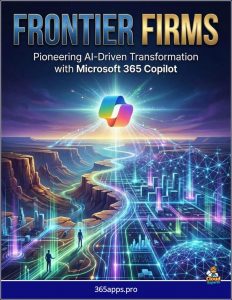 Microsoft Agent 365 represents a pivotal evolution in the company’s AI strategy.
It serves as a dedicated control plane for managing, securing, and governing AI agents at enterprise scale, rather than another chatbot or standalone productivity tool.
Announced around Microsoft Ignite 2025 and generally available from May 1, 2026, it extends familiar Microsoft 365 and security infrastructure to autonomous AI workloads.
Understanding the Product Landscape: Where Agent 365 Fits
Microsoft 365 has long centered on productivity applications (Word, Excel, Teams, Outlook, SharePoint), collaboration, and data/compliance tools. Microsoft 365 Copilot brought generative AI into these apps as an intelligent assistant. Copilot Studio and related tools then enabled custom agents—specialized AI entities that handle tasks, automate processes, or act with some autonomy.
Agent 365 sits above this as the governance and management layer. It is not primarily a builder (that’s Copilot Studio, Agent Builder in Copilot, or Microsoft Foundry) but the operational backbone for fleets of agents. Key features include:
- Unified registry: A single source of truth for all agents in the organization, whether built in-house, by Microsoft, partners, or third-party frameworks.
- Agent identities: Agents receive Entra ID-backed identities, their own email, OneDrive, Teams presence, and can act like “coworkers” with least-privilege access.
- Extended security and compliance: Integration with Microsoft Defender, Entra, and Purview for purpose-built agent controls, observability, auditing, and policy enforcement.
- Centralized visibility: Dashboards in the Microsoft 365 admin center for usage, security signals, actions, and impact tracking.
- Lifecycle management: Onboarding, policy application, monitoring, and governance for agents across the ecosystem.
It treats agents with the same rigor applied to users, devices, and applications, addressing the shift from experimental “agentic AI” to production-scale deployment.
Why and Where Customers Would Adopt It
Organizations face growing challenges with AI agents: shadow agents, unclear permissions, compliance risks, lack of visibility, and difficulties scaling beyond pilots. Agent 365 directly mitigates these, enabling confident expansion. Key adoption drivers:
- Security and compliance at scale: Enterprises in regulated industries (finance, healthcare, government) require audit trails, data loss prevention, and controlled tool access for agents. Agent 365 extends existing investments in Microsoft security rather than requiring new silos.
- Governance for proliferation: IDC predictions suggest billions of agents in use soon. Without a control plane, managing them becomes chaotic. Agent 365 provides centralized oversight.
- Operational efficiency: IT and security teams gain dashboards, alerts, and policy tools to manage agents alongside users and apps.
- Risk reduction: Features like least-privilege access, action logging, and sponsorship/approval workflows prevent rogue or over-privileged agents.
- Licensing and economics: Priced around $15 per user/month (standalone or bundled in higher suites like E7), it supports scaling agent usage without proportional licensing complexity for basic scenarios.
Ideal adoption scenarios:
- Large enterprises already heavily invested in Microsoft 365 and Copilot, looking to move from individual Copilot usage to multi-agent workflows.
- Organizations automating business processes (procurement, HR approvals, research, IT operations, finance reporting).
- Teams building or integrating custom agents that interact with Microsoft Graph, external tools, or other systems.
- Hybrid environments where agents from various builders (Copilot Studio, open-source, partners like SAP or ServiceNow) need unified management.
Smaller organizations or those in early experimentation may start with built-in Copilot agents and add Agent 365 as their agent footprint grows.
Role for Organizations Developing Custom 365 AI Agents and Applications
For developers and citizen developers, Agent 365 is an enabler rather than a replacement for building tools. It provides the enterprise “last mile” that turns prototypes into trusted, scalable solutions.
Key roles and benefits:
- Enterprise-readiness: Custom agents built in Copilot Studio or other frameworks gain Entra identities, enhanced observability, MCP tooling, and IT-approved templates when extended via Agent 365.
- Secure deployment: Developers focus on logic, knowledge, and actions; Agent 365 handles identity, access control, auditing, and policy enforcement at runtime.
- Governance integration: Agents can be registered, sponsored, and monitored centrally. This supports compliance teams while allowing innovation.
- Interoperability: It works across Microsoft-built, partner, and custom agents, creating a consistent management experience regardless of the underlying framework.
- Scalability and collaboration: Agents with their own presence can participate in Teams, handle emails, access approved data, and work in parallel with humans using familiar M365 tools.
This separation of concerns is powerful: development teams accelerate building specialized agents (e.g., a procurement agent, research agent, or industry-specific analyst), while IT/security ensures they operate safely within organizational boundaries.
The Broader Impact
Microsoft Agent 365 marks the transition to an “agentic” enterprise era, where AI moves from assistive chat to autonomous, collaborative entities embedded in daily workflows. By providing the missing control plane, Microsoft aims to reduce barriers to adoption and help organizations realize ROI from their AI investments without compromising trust or security.
As agent ecosystems mature—with more pre-built agents, richer SDKs, and partner integrations—Agent 365 positions Microsoft 365 as a comprehensive platform for both human and AI “workers.” For forward-looking organizations, it offers a practical path to harness agentic AI while maintaining the governance standards expected in the enterprise.
Early adopters should evaluate it alongside their Copilot usage, focusing on high-value processes where autonomy can deliver clear business value under controlled conditions.